When your well runs dry of dependable water, a reliable deep well pump becomes less of a purchase and more of a lifeline. The choice is not simply “which pump should I buy,” but “which pump will keep the water flowing through seasons of varying demand, while fitting the well’s depth, the power you can spare, and the tolerance of your budget.” Over the years I’ve installed, repaired, and evaluated a lot of deep well pumps in rural settings, suburban estates, and remote cabins. The Goulds name is a familiar reference point in this world, recognized for a blend of rugged construction and thoughtful engineering. If you’re starting your hunt, here is a ground-level, practical guide to finding Goulds deep well pumps near you and assessing what matters most before you commit.
What makes deep well pumps different anyway
Deep wells, by their nature, invite a certain tension between depth, flow, and electrical load. A shallow well pump has an easier life, with lower suction lift and shorter piping. A deep well pump faces longer vertical distances, more friction, and often a tougher demand from households that use water steadily for irrigation, livestock, or multiple baths and dishwashers. Goulds offers products designed to handle greater lift, with motors sized to deliver consistent pressure at depth, and housings built to resist the stress of longer prime runs.
From a practical standpoint, you’re weighing three core variables: the well depth, the expected daily water use, and the electrical system you’ve got. A pump that’s too small will cycle on and off more than it should, leading to premature wear and inconsistent pressure. A pump that’s too large for the plumbing and power available can waste energy, wear out the motor faster, and raise installation costs. The balance is not a single fixed number; it’s a relationship between the well’s static water level, the drop in water level during pumping, and your home’s demand curve.
Finding a reliable source
When you begin the search for Goulds deep well pumps near me, you’re not simply buying a product. You’re buying access to a network of support: reputable dealers, service Click here! technicians who know the Goulds lineup, and parts suppliers who won’t leave you stranded if something wears out. In my experience, the strongest relationships form when a dealer can pair you with:
- A pump model that fits the home’s water needs and the well’s geometry Comprehensive installation guidance, including piping, check valves, and pressure switch settings A plan for after-sale service, including available replacements and parts like seals and gaskets Transparent pricing for the pump, motor, and any required controls Clear expectations about lead times, especially if seasonal demand affects stock
To begin, use local directories, manufacturer-distributor maps, and reputable plumbing suppliers. If you’re near a regional Goulds distributor, you’ll often find a show room where you can discuss your well data with a technician who will measure your well depth and static water level, then match a model to your needs. It’s worth visiting in person if you can, because the interplay of depth, nozzle size, and wiring gauge becomes clearer when you can review the equipment up close.
Assessing your well and your needs
Before you shop, assemble the crucial details. Having a clear profile of your well saves you from overbuying or underperforming. The key numbers to collect are:
- Well depth and static water level: How deep is the well itself, and at what depth is the water level currently resting? Pumping level and drawdown: When the well is pumping, how far does the water level drop, and how quickly does it recover after pumping stops? GPM demand: How many gallons per minute does your household actually use on peak days? If your irrigation needs are significant, factor that in as well. Voltage and circuit capacity: What is the available electrical service in your outbuilding or main panel? This influences which motor horsepower your installation can support. Pipe size and fittings: What is the diameter of the discharge piping and the pressure tank configuration? This affects the selection of the pump’s outlet size and the flow it can sustain.
With this information, you can have an informed discussion about whether a Goulds 4-inch submersible, a larger 4-inch model, or a different configuration is the right path. The goal is to align the pump’s horsepower and the motor’s capacity with the well’s lift and the home’s demand, not simply to chase the biggest model you can find.
Breaking down Goulds options for deep wells
Goulds pumps cover a broad spectrum of configurations, but the common thread is robust construction and emphasis on reliable, long-term service. In practical terms you’ll encounter several families of products, each with its own sweet spot.
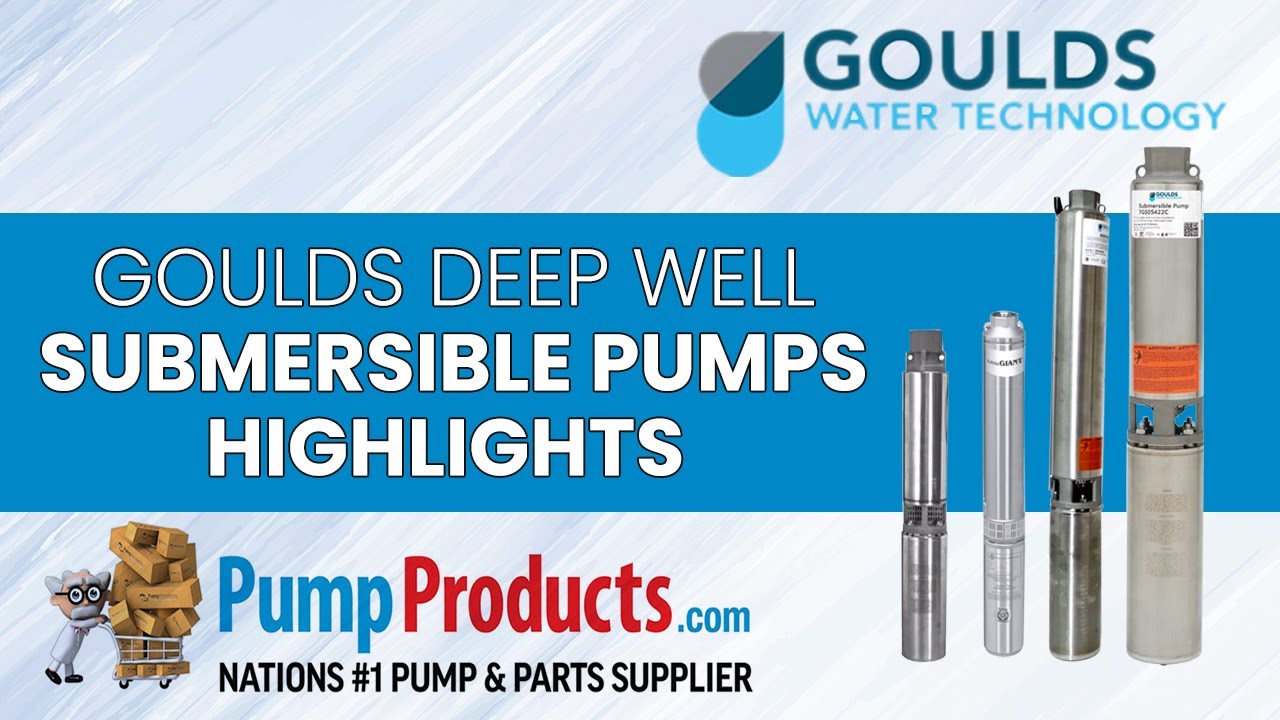
- 4-inch submersible deep well pumps: These are the workhorses for many residential wells. They live inside the wetted portion of the well and push water upward through a sealed column. They tend to pair well with standard pressure tanks and are a good match for typical household usage in a single family home. 3-inch or smaller submersible pumps: If your well is shallower or you’re dealing with tighter casings, a 3-inch model can be a strong, space-saving option. The trade-off is generally a cap on flow at higher demands, but this is precisely the scenario where good system design matters. Surface pumps for less deep scenarios: Some Goulds configurations lend themselves to surface mounting when the well depth and cover allow. These are useful when the installation environment makes submersibles impractical or when you want a more accessible service routine.
No matter the form factor, the core considerations stay consistent: reliability, efficiency, and the ability to deliver consistent pressure. The best fit isn’t always the biggest pump. It’s the one that works with the well’s lift and your home’s usage pattern without requiring excessive electrical service or complex controls.
A practical approach to selection
When you’re in the store or on the showroom floor, you’ll hear numbers and terms that can feel abstract. Here’s a practical way to distill it down to actionable choices.
- Start with the duty point. The parameter you’re aiming for is the point at which the pump operates most of the time. This is usually the intersection of your well’s lift and your home’s demand. It’s where warranty cards and performance charts meet reality. Match horsepower to your electrical capacity. A typical home well pump sits on a dedicated circuit. If you have a 20-amp service, a smaller horsepower pump may be more sensible than a high-horsepower unit that demands a larger circuit. If you plan to upgrade service, you can consider a higher horsepower pump, but you still want to avoid overspecifying for efficiency reasons. Consider the pressure switch and tank pairing. The pressure switch determines when the pump starts and stops. A higher cut-in and cut-out can change how often the pump cycles, which in turn affects wear. A properly sized pressure tank helps smooth out those cycles, reducing short cycling that wears out bearings and seals. Think about efficiency and heat. Submersible pumps operate in a sealed, water-cooled environment, which is part of what helps them tolerate long hours of operation. However, the motor still generates heat, and a model with slightly higher efficiency can save you a noticeable amount on electricity over years of operation. Plan for serviceability and parts availability. A well-supported product line means genuine Goulds parts and compatible seals, gaskets, and bearings remain accessible. If you’re in a remote area, you’ll appreciate a dealer who can ship parts quickly or offer a service window that minimizes downtime.
Installers who know Goulds can also tailor the setup to your property. It’s common to add a check valve to prevent backflow, ensure the piping has appropriate slope to avoid air pockets, and set the pressure tank with a gentle air charge that matches your system. These details might seem small, but they influence performance and longevity.
Two important realities I’ve learned from experience
Reality one: A well-designed system pays for itself during hot, dry spells. A thoughtful combination of pump, pressure tank, and switch settings can keep your house comfortable even when irrigation demands surge. The right amount of flow keeps showers steady, the dishwasher happy, and the washing machine from interrupting its cycle because of a pressure dip. You may not notice the moment-to-moment, but you’ll notice the consistency when you flip on a faucet after a long day and water comes out clean and steady.
Reality two: Not every well’s limit is the same. Some wells clean up with modest demand, others push a family of five through summer with irrigation and livestock duties. The magic of Goulds is that the line includes options that can be dialed in to your well’s character. If your static water level is stable at 60 feet but drops to 200 feet during pumping, you’ll need to size the motor and check the wiring accordingly. If your home’s irrigation uses high volumes in the evenings, you’ll want a system that can deliver that extra flow without tripping the circuit.
A note on warranties and serviceability
Warranty coverage and service sensitivity vary by model and by region. It’s wise to ask directly about:

- The duration and scope of the pump warranty What constitutes proper installation under warranty Availability of replacement parts in your region Suggested service intervals for seals, gaskets, and bearings How to obtain authorized service or troubleshooting support
Clear documentation, combined with a reputable local dealer, often translates to faster turnaround times when you need a part or a repair. In places where field service is scarce, you’ll appreciate a manufacturer-supported network that can guide a layperson through a troubleshooting checklist or ship a replacement component quickly.
Two short lists to help you shop with precision
First list: a quick, practical pre-purchase checklist (five items)
- Confirm well depth and pumping level with a professional assessment Match pump horsepower to available electrical service and desired peak flow Plan for a compatible pressure tank and a reliable pressure switch setting Ensure the discharge piping size and layout fit the pump outlet and tank Check dealer support, parts availability, and warranty terms
Second list: questions to ask a Goulds dealer or installer (five items)
- Which Goulds model best suits my well depth and GPM demand? How does the proposed setup handle irrigation peaks and hot weather? What is the recommended maintenance schedule and what parts are most likely to need replacement? Can you provide performance data or a field test that demonstrates expected flow and pressure? What are the total installed costs, including electrical work, piping, tank, and any permits?
These lists are not an end in themselves but anchors you can return to as you compare quotes, verify technical data, and plan for future upgrades. The aim is to enter conversations with confidence, knowing the critical variables and how they play together.
Practical installation realities
A smooth installation reduces the probability of early trouble. If you’re installing a Goulds deep well pump, you’ll typically encounter:
- A sealed well cap and a drop pipe that carries the pump to the bottom of the well A submersible motor rated for continuous duty in a water environment A cable assembly designed to withstand submersion and resisting abrasion over many years A pressure tank and a switch that govern when the pump cycles on and off A check valve and proper piping to maintain a stable flow and prevent backflow
Professional installation matters, especially for deeper wells and higher water demands. A qualified technician will verify the well’s pump intake position, ensure the motor is correctly wired for voltage and phase, and calibrate the pressure switch according to the tank’s air charge and the home’s water usage pattern. If something looks off—abnormal vibration, unusual heat, or inconsistent pressure—do not hesitate to pause and re-check. These signals often point to a misalignment, a bad electrical connection, or a sensor that is not set properly.
Maintenance that prevents surprises
With a good Goulds pump, routine maintenance keeps you from expensive outages and help avoid dramatic water pressure dips. Maintenance is not glamorous, but it is practical and straightforward. A simple routine includes:
- Inspecting electrical connections for signs of corrosion or looseness Verifying the pressure switch is set correctly and the tank’s air charge is within spec Checking for unusual noise or vibration during operation, which can signal bearing wear or misalignment Watching for leaks at seals, fittings, and the pump housing Testing the system periodically to verify consistent pressure and adequate flow
If you keep a regular schedule and address issues early, you’ll extend the life of your Goulds system and avoid the surprises that arrive with a sudden loss of water.
Real-world anecdotes and edge cases
I’ve seen scenarios where a homeowner assumed a pump was undersized because the tank ran dry in high-demand months. A quick adjustment of the pressure switch, paired with a slightly larger storage tank, resolved the issue without swapping the pump. In other households, the well depth changed with the seasons due to seasonal droughts, and a modest upgrade to a pump with a higher lift capability extended the well’s usability through dry spells.
Another common situation involves saltwater intrusion near coastal properties. In those circumstances, a pump selection must consider corrosion resistance and possibly protective coatings or an alternative material choice that reduces the risk of rapid wear. While Goulds offers a range of robust options, the specific environmental conditions can tilt the decision toward particular models or accessories designed to resist corrosion.
The buying journey in practice
When you’re ready to buy, the most effective path is to approach with a clear set of needs and a willingness to listen to the technician’s guidance. A dealer who is worth your trust will take your well data, your home’s profiles, and your budget into a thoughtful conversation. They will present options that balance the goals of reliability, efficiency, and longevity. They will also outline the trade-offs between a larger, more capable unit and a leaner setup designed for lighter use and smaller electric load.
As an informed shopper, you should leave with a proposed configuration, a realistic installation timeline, and a transparent price that includes the pump, motor, tank, switch, fittings, and labor. If something feels uncertain, request a second opinion or a written performance projection based on your well’s actual metrics. It’s reasonable to expect a fairly precise estimate, especially when your well data is complete and accurate.
A final thought about value
Value in this space isn’t measured purely in upfront price. It’s a blend of reliability, service accessibility, and the ability to recover quickly from a dry spell or an irrigation surge. Goulds deep well pumps have earned a reputation in the field for endurance and serviceability, but the payoff comes when you maximize the synergy between your well, your electrical system, and your household’s needs.
If you’re embarking on this journey this season, start by gathering the well’s data, connect with a local Goulds dealer who can speak both the technical language and the practical realities of your property, and keep your eyes on the long horizon. A well matched to your home’s use and your well’s quirks will deliver not just water, but peace of mind when summer heat turns the taps into daily reliability.
Closing reflections
No two wells are alike, and no two households use water in exactly the same way. The beauty of a Goulds deep well pump system lies in its adaptability and the vendor ecosystem that surrounds it. With clear information, careful sizing, and a trusted installer, you can secure a dependable supply that serves your family for years to come. You’ll avoid overcomplication where it isn’t needed and you’ll avoid underperformance where it would hurt. In the end, the goal is straightforward: steady, clean water where you expect it, without fuss, today and into the future.